

Hajipur is the headquarters and largest city of Vaishali district of the state of Bihar in India. The city is known for cultivating bananas. Patna is only 10 km (6.2 mi) from Hajipur, with the cities separated by the Ganges River. The metropolitan region of Patna comprises the Patna Regional Development Authority (PRDA), which includes Hajipur under Bihar Urban Infrastructure Development Corporation.
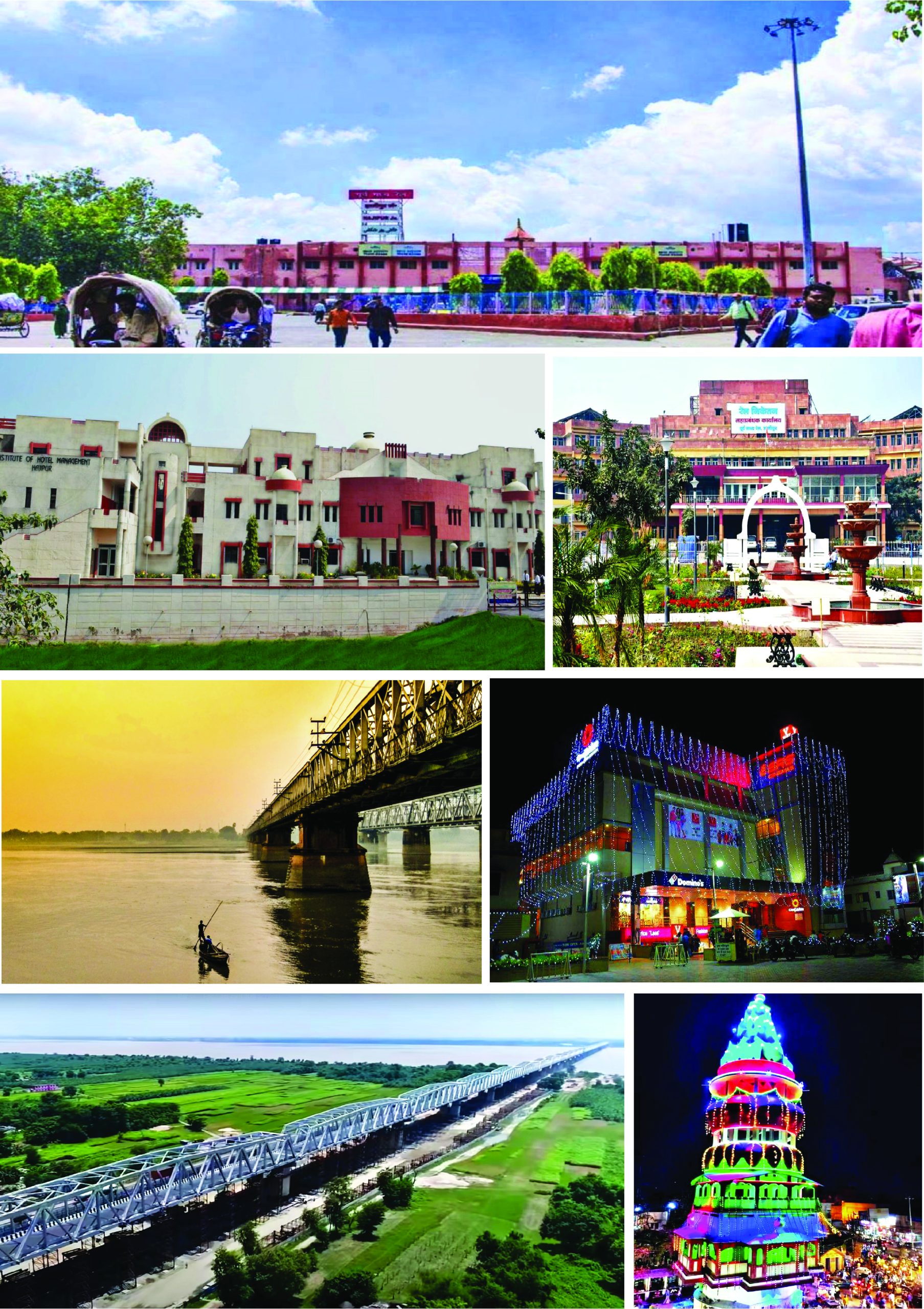 Mahatma Gandhi Setu, one of the longest bridges in the world at 5.75 kilometres (3.57 mi), links Hajipur to Patna. After Patna, it is the fastest-developing city in Bihar, primarily because of its proximity to Patna. Hajipur lies on the north bank of the Ganga while Patna lies on the south, the Gandhi Setu bridge connects both cities. Another bridge, the Digha–Sonpur Bridge, which crosses the Ganga north-west of Patna, narrows the distance between Hajipur and Patna. There have been plans to expand Patna to Greater Patna, which would entail absorbing Hajipur, Bidupur and other surrounding towns.
In ancient times, Hajipur was known as Ukkacala and was the first village after crossing the Ganga at Patna. The village of Hajipur gained significance, as it was the venue of one of the discourses given by Buddha. Buddha preached the Cula Gopalaka Sutta, a Middle Length Discourse, here. Along with that, it is also of interest because a portion of Ananda’s ashes were enshrined in the town. Ananda, the closest disciple of Buddha, acted as the Buddha’s attendant for twenty years and outlived him by several decades. Hajipur is also known for the land of Amrapali.
The economy of Hajipur is largely service orientated, but it also has an agricultural base and industrial sector. There is a dedicated industrial area in Hajipur apart from Export Promotion Park of India, Hajipur—(EPIP), maintained by Bihar Industrial Area Development Authority—(BIADA) in an area of 150 acres where many Big Brands of FMCG & Agro-based companies like PepsiCo, Britannia Industries, HUL, Godrej Consumer Products, Anmol Industries, Sudha Dairy, Wayss Ice Cream, Bansal, Treat, Avon Cycle, etc. have their manufacturing units.

Vaishali today is a small village surrounded by banana and mango groves as well as rice fields. But excavations in the area have brought to light an impressive historicalpast. The epic Ramayana tells the story of the heroic King Vishal who ruled here. Historians maintain that one of the world’s first democratic republics with an elected assembly of representatives flourished here in the 6th century B.C.in the time of the Vajjisand the Lichchavis and while Pataliputra, capital of the Mauryasand the Guptas, held politicals way over the Gange plane, Vaishal was the center for trade and industry. Lord Buddha visited Vaishali frequently and at Kolhua,close by, preached his last sermon Here. To commemorate toe event, Emperor Ashoka, in the third century B.C. erected one of his famous lion ” pillars here.

Hundred years after ” the Mahaparinirvana of the Buddha Vaishali hosted the second great Buddhist council. Two stupas were erected to commemorate this, event.Jainism,too,has its origins in Vaishali,for in 527 B.C.,Lord Mahavir was born on the outskirts of the city, and lived in Vaishali till he was 22. Vaishali is then twice blessed and remains an important pilgrim centre for both Buddhists and Jainees, attracting also historians foraging for the past. On the outskirts of Vaishali stood the grand double storied Buddhist monastery. Buddha often discoursed here. He extended spiritual enfranchisement to women by admitting them to the Holy Order which was founded here. Legend has it that on one of his visits, several monkeys dug up a tank for his comfortable stay and offered him a bowl of honey. This is regarded as one of the great incidents in the legends of Buddha, who announced his approaching Nirvana and preached his last sermon here.

The Lichchhavis came a long way to bid him farewell on his way to Kushinagara and finally,they were stopped by a rivercreated by Buddha.He once again paused to have a last of his much loved city. Asa piety for Vaishali,he had already given his alms bowl which remained here for long time. Alife size-pillar beside a brick Stupa at Kolhua Cmmmemorates Buddha’s last sermon and announcement of his approaching nirvana.The lion faces north, the direction Buddha took on his last voyage.Adjacent to this is the tank associated with the monkeys offering honey. Near by are the skeletal remains of a monastery where Buddha resided and a votive stupas dot the region. Vaishali museum houses some of the archaeological remais discovered here.Facing the museum is the Abhishek Pushkarni Which was holy to Lichchhavis.

On one side of the lake is newly built Vishwa Shanti Stupa, a sixth in the series to be erected in India. Close to the museum is the shaded stup a which is supposed to have housed the casket relic with the ashes of Buddha. Archaeologists have uncovered a good deal of Vaishaili begins with a huge mound which is associated with the ancient Parliament referred to Raja Vaihala Ka Garh. Bawan Pokhar temple houses a rich collection of black basalt images dating back to the Gupta and Pala period. Another black basalt, four headed Shivling (Choumukhi Mahadeva) was discovered when a reservoir was being dug. Behind the bawan pokhar temple is a Jain temple famous for its image of the Trithankar. A little distance from these temples lies the Lotus Tank which used to be a picnic spot of the Lichchhavis. Further north at Lauria Areraj, 31 Kms from Motihari, lies one of the Ashokan Columns with six of his edicts. The column is devoid of its capital. Another Ashokan column along with the lion capital can be visited at Nandangarh, 23 kms from Bettiah. These pillars possibly mark the course of the ancient Royal highway from Patliputra to Nepal valley. Few kilometers from the monolith at Nandangarh is the mighty brick stupa which is believed to have stored the casket relic contaning the ashes of Buddha. At Nandangarh one can also see a dozen vedic mounds that contain the remains of ruling clans of pre-Buddhists times.